
Visions of the Jewish Future in Eastern Europe: Education, Language, and Identity
Tuition: FREE
This is a live, online course held weekly on Zoom. Students will receive a Zoom link after registering for the course here on the YIVO website. This course will be conducted in English.
How did Jewish communities in Eastern Europe imagine their future? One of the most important arenas for these debates was education. This mini-course invites participants to explore the rich and sometimes competing educational worlds available to Jews in the nineteenth and early twentieth centuries.
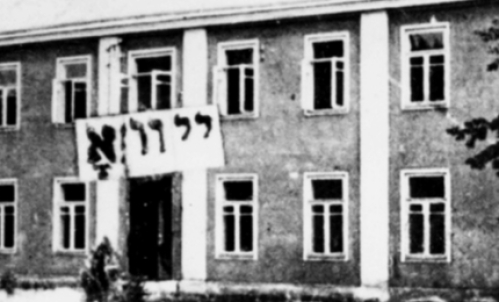
We will look at a wide range of schools, from Zionist Hebrew schools and secular Yiddish schools in interwar Poland to state schools attended by Jewish children from the nineteenth century to 1939. Through these examples, the course shows how schooling shaped everyday life, cultural belonging, and ideas of Jewish identity. Who founded these schools? What values did they promote? And how did students experience them?
Special attention will be given to questions of language and gender. The course explores why Jewish boys and girls often attended different kinds of schools, and how Orthodox education, Hebrew education, and professional training opened (or limited) possibilities for Jewish women. Together, these stories reveal how education became a key tool for imagining different Jewish futures.
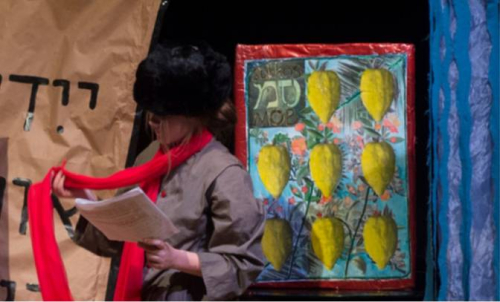
The mini-course is organized by the YIVO Institute for Jewish Research and the POLIN Museum of the History of Polish Jews. The course accompanies the new temporary exhibition at the POLIN Museum “The Power of Words. On Jewish Languages,” which explores how Jewish languages developed across centuries and regions and shaped the cultural, religious, and social identity of Jewish communities living in diaspora.
To be up-to-date with POLIN Museum's activities, we encourage you to sign up for the POLIN's newsletter here.

Schedule
SESSION 1:
May 17, 2026 | 11:00am – 12:00pm ET
Can one reconcile Poland with Land of Israel/Palestine? Hebrew education and Jewish visions of future in Interwar Poland.
Instructor: Kamil Kijek
This webinar will discuss major dilemmas that stood before the Hebrew school educational systems in Interwar Poland, by looking at educational programs and the recorded experiences of pupils of Tarbut, Shul-Kult, Yavne and bilingual Polish-Hebrew schools’ networks. What were the controversies, discussions and educational praxis in relation to the Hebrew language? How did various Hebrew educational networks and their activists reconciled the emigration and building of Jewish national homeland in Palestine/Land of Israel with fighting for better future of Jewish national community in Poland?
Kamil Kijek is an Assistant Professor and deputy director of Taube Department of Jewish Studies, University of Wrocław, Poland. His first book, Modern and Radical. Politics, Culture, and Socialization of Jewish Youth in Interwar Poland appeared in 2026 in English translation with Bloomington: Indiana University Press, 2026. And his forthcoming book is titled Polish Shtetl after the Holocaust? Cold War, Jewish World and Jewish Community of Dzierżoniów, 1945-1950.
SESSION 2:
May 24, 2026 | 11:00am – 12:00pm ET
Gender and Jewish Education in Modern Eastern Europe
Instructor: Aleksandra Jakubczak
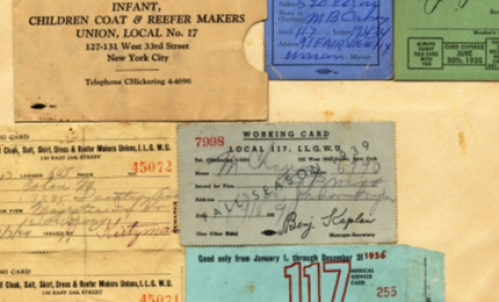
In Jewish society of the nineteenth century, education was shaped by clear gender divisions that defined different expectations and learning paths for boys and girls. While boys were typically the focus of formal religious education, girls’ schooling was more limited and often informal. By the late nineteenth and early twentieth centuries, however, new educational opportunities began to emerge for Jewish girls. This webinar focuses on vocational schools that offered young Jewish women practical training—often in professions such as dressmaking—reflecting the growing belief that women’s employment was essential for Jewish families facing economic challenges.
Aleksandra Jakubczak is a scholar specializing in the social and economic history of East European Jewry in the 19th and 20th centuries, focusing on women, gender, migration, and transnationalism. In 2023 she received her PhD from Columbia University and, in 2024, was a postdoctoral fellow at the Center for Jewish Studies at Harvard University. Since 2022, she has been working as a historian at POLIN Museum of the History of Polish Jews in Warsaw.
SESSION 3:
May 31, 2026 | 11:00am – 12:00pm ET
For Yiddish to the barricades - TSYSHO schools in the interwar period
Instructor: Anna Szyba
When the Central Jewish School Organization was founded in 1921 at a ceremonial meeting at Warsaw’s Apollo Cinema, a new chapter began in the lives of many children from poor families of small traders, artisans, and laborers. For the first time, covered by the state-mandated compulsory education, they not only received the opportunity for a secular education, but also for instruction in the language of their daily lives—Yiddish. But could this opportunity have been fully realized in the Second Polish Republic, and did it meet the expectations of the organization’s founders and activists, the youth, and Jewish parents?
Anna Szyba is a cultural scholar and translator. She researches pedagogical methods used in schools of the Central Yiddish School Organization (TSYSHO) and is currently affiliated with United States Holocaust Memorial Museum. In the past she has worked for the Center for Yiddish Culture in Warsaw.
SESSION 4:
June 7, 2026 | 11:00am – 12:00pm ET
Jewish children in public schools in Habsburg Galicia
Instructor: Alicja Maślak-Maciejewska
Before the outbreak of the First World War around one hundred thousand Jewish children attended primary secular schools and another ten thousand secondary ones. Most of them learned in non-Jewish institutions, where they constituted a minority. This webinar explores the school experiences of those children: how did their everyday reality look like? Did they have an opportunity to develop their Jewish identity? And how did public school influence the Galician Jewry in general?
Alicja Maślak-Maciejewska is a historian who specializes in social and religious history of Central-European Jewry in the nineteenth century, especially in Habsburg Galicia. She works in the Institute of Jewish Studies at the Jagiellonian University. Her latest book is entitled Poza chederem. Żydzi w galicyjskiej szkole publicznej [Beyond heder. Jews in public schools in Galicia] (2025).
This course is organized within the Global Education Outreach program, supported by Taube Philanthropies, the William K. Bowes, Jr. Foundation, and the Association of the Jewish Historical Institute of Poland.
